Species
Elf
- Noble
- Graceful
Haughty(struck through)- Sylvan
- Creature type
- Humanoid
- Speed
- 9 m
- Size
- Medium
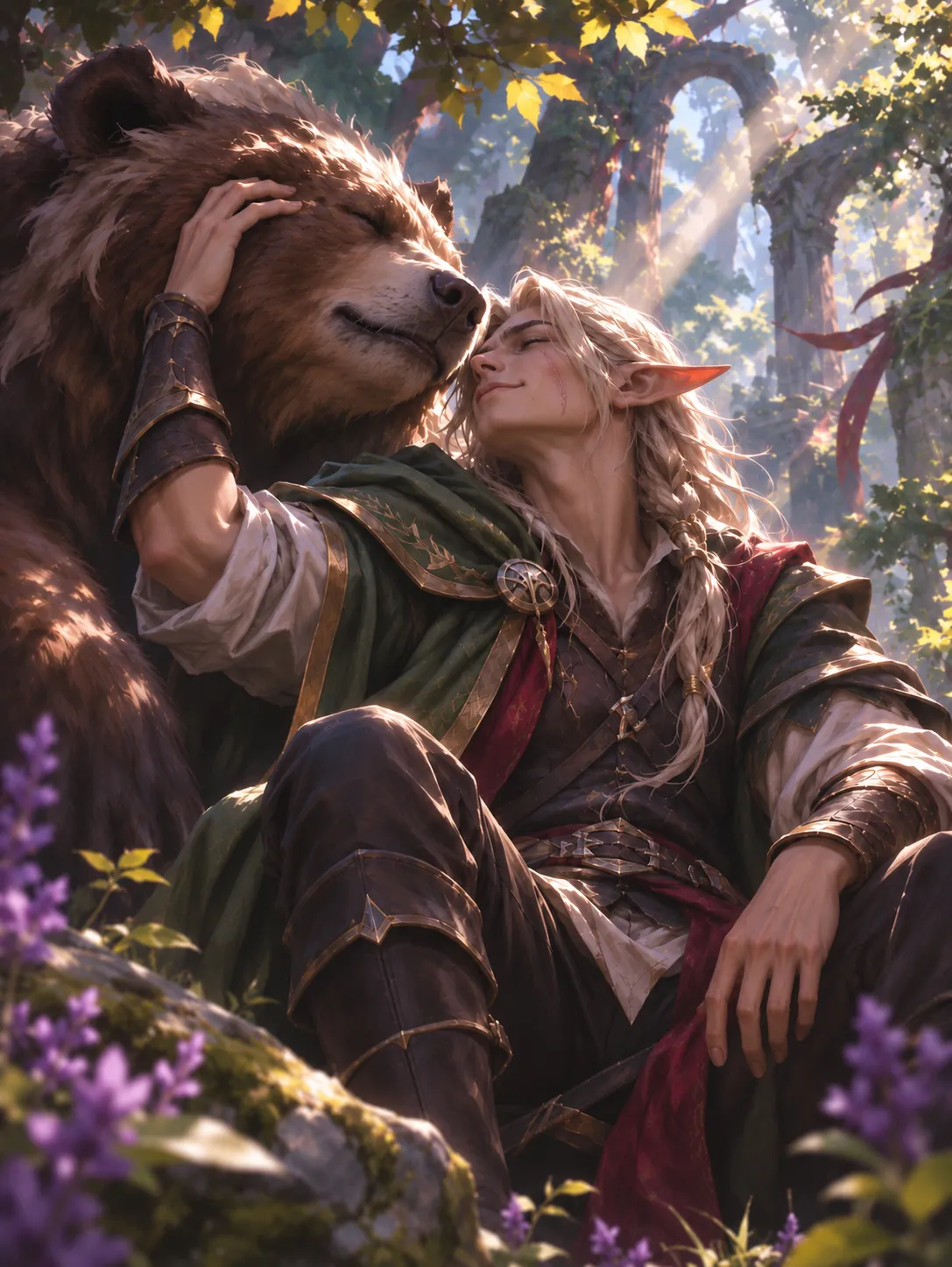
Elves are the heirs of the Galwarians, bearers of an endless grace and of an ancient bond with nature, from which they draw the magic the goddess Élyséa gave them. In the world of Eden they dwell in the hollows of the world-trees that Élyséa brought forth, their homes rising in slender walkways and platforms of living wood, lit by the phosphorescent glow of runes. They move lightly beneath the canopy, where the song of the leaves and the murmur of the rivers weave a constant melody. Driven by a deep respect for life, they seek balance and beauty in the magic of nature, cultivating craft and poetry rather than exploitation and profit.
“Élyséa… why do you let this happen? All my life I have served you, as the mothers of my line did before me. Is this how you repay us? Every life is equal, is it not? So we are to let life be life… Wait? Watch? And all the while, my people die. My own people look at me with disgust: in their eyes I am a queen who has failed. I no longer know if you even hear me. Where are you when I need you? This is my last warning… I will protect Brécelann, with… or without you.”
Playing Elf characters
You grew up under a matriarchy: your lineage passes through your mother, and from childhood you were taught to respect maternal authority and to honour your elders. Like every elf, you respect Élyséa, whether or not you worship her formally, and you know her teaching: let life be life, for every life is equal. Guided by her teachings, your people take from the forest only what is vital, and restore and tend the land without ever spoiling it.
Your longevity gives you a perspective both detached and wise, and your grace hides a constant vigilance, for none watch over the world more fiercely than those who have seen its ages fall. Since the Great War, your people have sheltered behind a veil of arrogance and judged strangers with a caution often seen as haughty by those who do not have the preservation of the natural world at heart. Friction arises between elves and humans, though most humans show genuine goodwill. You may have trained in the famed elven martial academies, which teach the graceful people of the forest to defend themselves with nobility and finesse.
- Adulthood
- Around 100 years, though their bodies reach full mastery around 20
- Lifespan
- Often beyond 700 years
- Height
- Between 1.50 m and 1.80 m
- Languages
- Common, Elvish
Names
Among the elves, every first name carries a legacy: it springs from a glorious event in the family or a notable moment in the village's history. Unlike a human's, it is neither masculine nor feminine. The family name is passed down through the mother and drawn from a guardian creature that watches over the lineage, or from the world-tree beneath which the clan lives.
- Mixed names
- Adhran, Aeryn, Bryndar, Caelith, Daeris, Eryndor, Faelith, Gaelwyn, Helindor, Illarien, Jaedryn, Kaelith, Luthien, Maerion, Naeris, Olyndor, Phaeron, Quelindra, Rhaella, Saelar, Thalion, Ulvaris, Vaelora, Wyneth, Xandriel, Ysilith, Zephyra, Aerion, Branthir, Cerelyth, Dornath, Elorim, Farendir, Galathor, Ivariel, Jorendil, Kiralyn, Leyanth, Moriel, Nythorin
- Family names
- Gerawen, Faelgorn, Aelor, Thandril, Myrath, Halindor, Oryndel, Elandor, Coranthia, Brethil, Fenrath, Galdorin, Drakanor, Sylvinar, Yavandil, Rhyolin, Vorandel, Quenelor, Nelgros, Vyranth, Thalorin, Althoris, Ilveran, Sorandir, Caranthor, Elashar, Danthir, Lyrandor, Mirelith, Faerendil, Nymren, Pelorin, Quelinar, Ryndor, Sylendril, Tharion, Valtorin, Ylandeor, Caerindel, Dorandel, Evelith, Mirithor
Species Skills
Nothing to show yet.
Every entry here is a draft. Turn off Hide drafts to see them.
No results.
Drop a filter or clear the search to see the full list again.
The last Galwarians
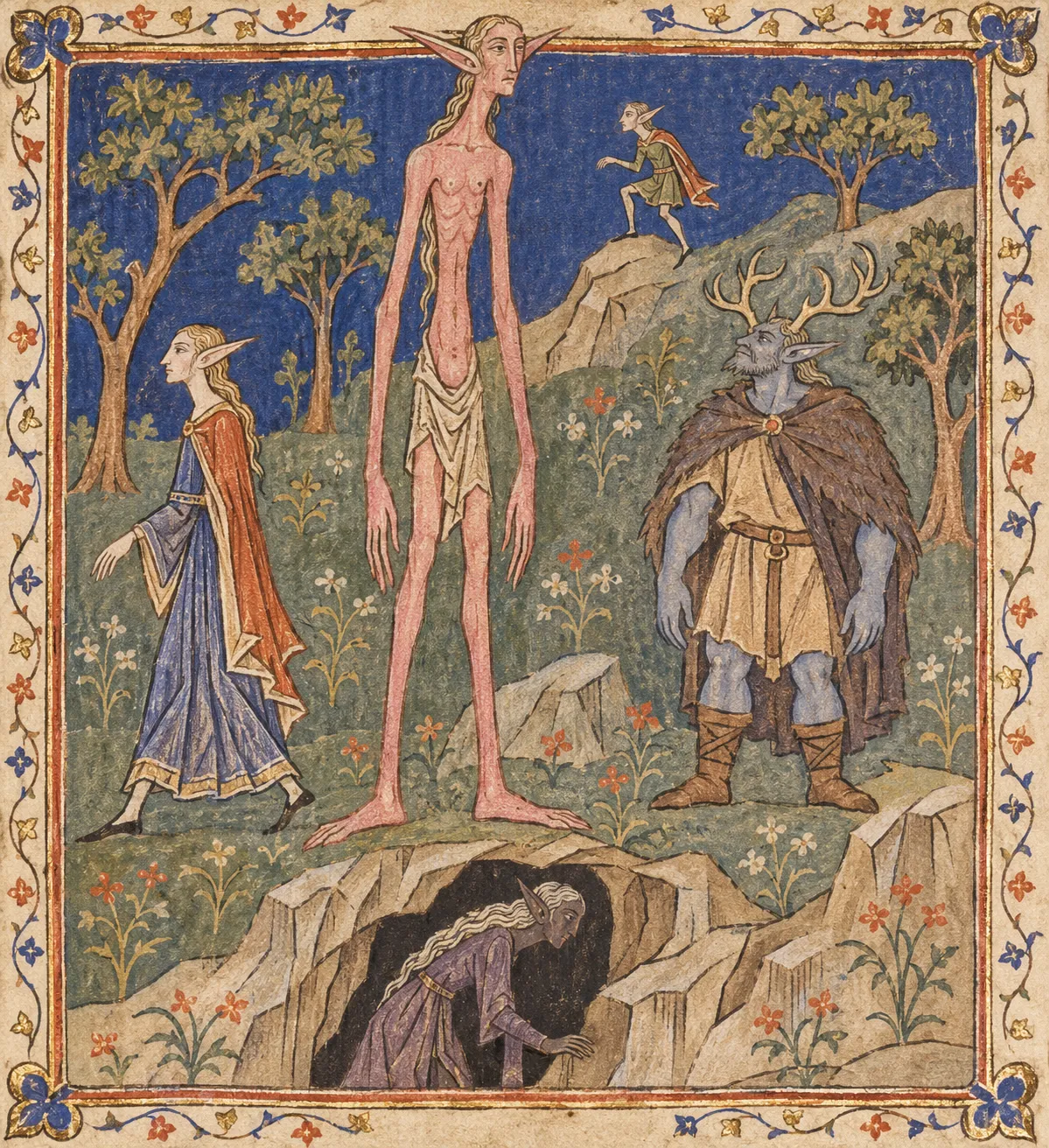
Elves descend from the ancient Galwarians, those masters of primordial magic who once shaped Eden alongside the ancient dragons. When the First Radiance ravaged their powers, a band of exiles withdrew into the deep forests and called upon the goddess Élyséa, guardian of the wild.
Moved by their torment, she breathed part of her strength into the very roots of Eden, giving birth to the world-trees and teaching the last Galwarians the art of drawing magic from sap, wind and chlorophyll, and from the whole natural world around them. Ever since, that magic has flowed through the clans descended from the last Galwarians, the elves’ among them, binding them forever to the breath of nature and to the sacred balance of their world.
Élyséa’s teaching is to let life be life, for every life is equal. Though every elf deeply respects Élyséa and honours the world-trees as the first source of their magic, not all worship her formally; some seek other spiritual paths, while keeping a sincere respect for the goddess who saved their ancestors.
As the first of the Galwarians’ descendants that humans encountered, the elves are the people most associated with those ancestors. It is said that they resemble the Galwarians most closely, and that all the other lineages have strayed much too far from them. The elves are well known for reminding any fool who does not know it yet that only a few millennia ago their ancestors ruled this earth and its magic.
Elves belong to an ancient line, forged in the deep roots of Eden and in the eternal murmur of the primeval woods. They are the guardians of a forgotten balance, heirs to pacts made long ago between magic, nature and the stars.
Half a century of war
For centuries the elves remained a discreet people, withdrawn into the heart of their cities at the foot of the world-trees and trading only with the halflings of the plains, famed for their simple wares and their knack for barter. This exclusive relationship, built on mutual trust and respect for custom, let the elves preserve their culture and their harmony with nature while exchanging fine cloth and essences for food and crafted goods.
But after the Second Radiance, the mass arrival of humans upset that balance: they crossed the elven borders and started more than half a century of conflict that ravaged forests and cities.
This war, the war of Brécelann, ended in a final battle of the same name, which was fought near Glenmor, a small village at the edge of the forest, and turned into a massacre on both sides. Jacques “Le Scellaire” Arsenault then called for peace and acted as mediator between Arthur Colbert and Queen Tiar Vyrefiel. The treaty of Glenmor ended the war.
From that long war grew a stubborn mistrust: wounded in their sacred sanctuary, the elves learned to shield themselves behind a veil of arrogance and to judge strangers with caution, a caution often seen as haughty by those who did not have the preservation of the natural world at heart.
The Matriarchy
In elven society, power and authority belong above all to women and are embodied in a reigning queen: this is the Matriarchy, in which lineages pass through the mother, who chooses for herself the heiress to her name and her duties.
Sometimes villages and cities unite under a queen and form a Queendom, such as the Queendom of Brécelann. A reigning queen governs there: she decides, helped by a council of four matrons who each speak for great cities or clans, and whose wisdom guides political, cultural and spiritual decisions. Every Queendom has its seat of power, the Matronobriga, where the political life of the Queendom is debated and decided.
In smaller autonomous villages and groups, every collective decision is reached by consensus during the vigils of the Canopy, where elders and young alike keep watch over the fragile balance of their world.
The forest priestesses, charged with keeping the balance between magic and the wild, hold a central place and serve as intermediaries between Élyséa and the people. Young elves, whatever their gender, learn from childhood to respect maternal authority and to honour their elders, but it is the women who hold the keys to the archives, the healing lore and the sacred rites. This order guarantees a stability measured in millennia: power, embodied by the protecting mother, sees to it that every generation carries forward the harmony with nature and the ancestral memory.
Bouts in the glades
The elven art of combat stands out for its nobility and grace: warriors and wardens train from childhood with the fine-bladed sword and the longbow during ritual bouts in the glades, learning a fluid strategy that mimics the movement of branches in the wind. The martial academies, open to nobles and adventurers alike, pair physical discipline with meditation, so that every gesture and every shot is in harmony with the spirit of the world.
Cities of glass and living wood
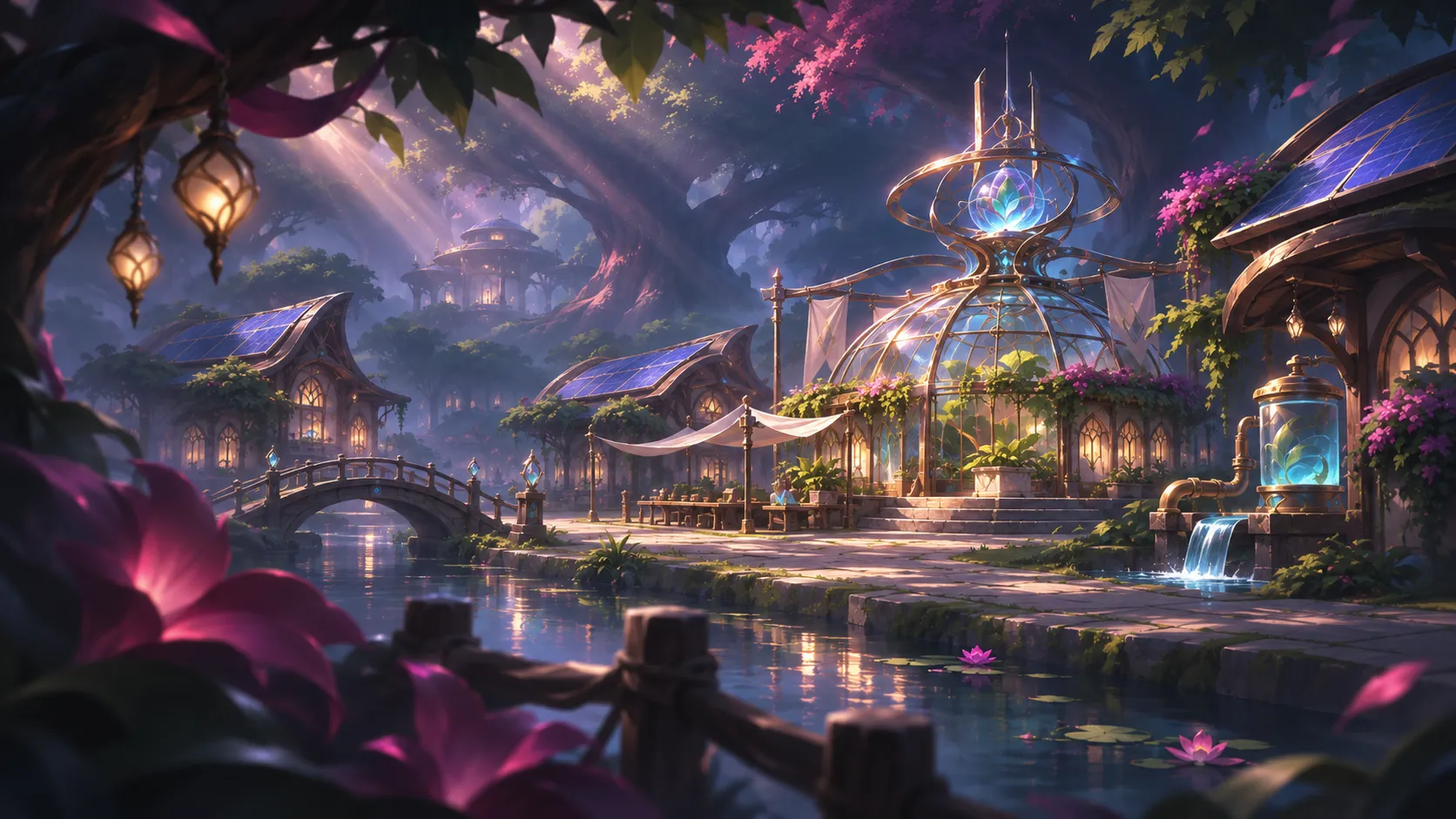
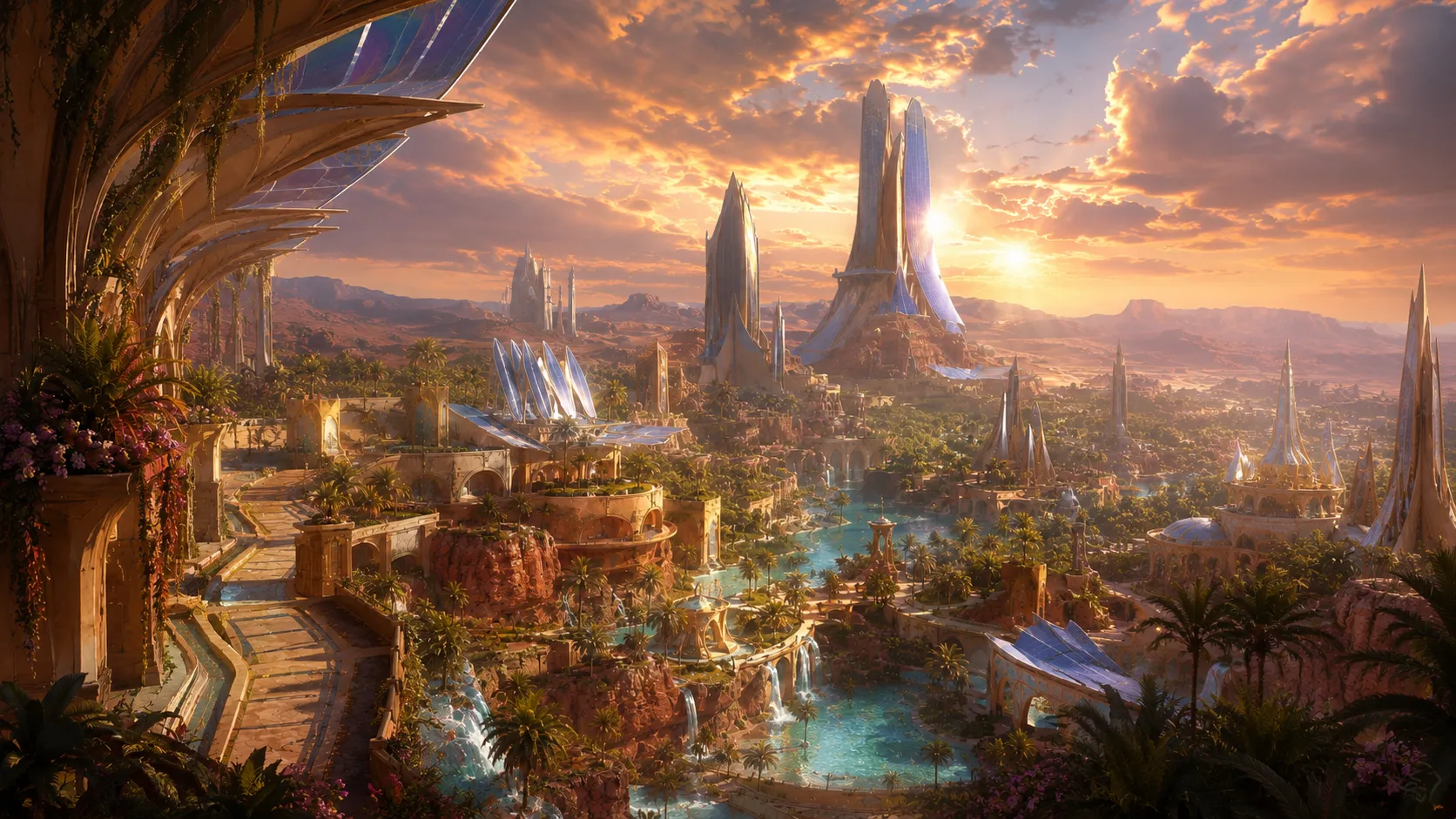
At the foot of every world-tree rises a great elven city, a living foundation embodying the alliance of nature and civilisation, where towers of green glass glitter in the sun and gilding traces patterns of foliage. In these royal cities, cultural life blossoms around the arts: music with bewitching melodies, poetry sung during the vigils beneath the boughs, the carving of wood and living stone, and the weaving of cloth steeped in magic. The Elvish tongue is a slow song, woven of poetry and harmonics, that few mortal beings can reproduce faithfully.
Away from the great cities, other elves live in villages nestled in the hollows of trees or along riverbanks, where their dwellings melt into the greenery: structures of semi-opaque green glass adorned with organic gilding, or “living” houses shaped around and within the trunks, respecting the natural growth of the trees.
The elves’ economy rests above all on barter: craftspeople of high standing, they trade fine cloth, wooden jewellery and enchanted gems for what they need and no more (rare foodstuffs, and the metals they refuse to mine themselves), shunning any overconsumption or ruthless exploitation. Guided by the teaching of Élyséa, they take from the forest only what is vital, gathering with restraint and using ancestral techniques to restore and cultivate without ever harming the land.
Bearing and adornment
A slender silhouette and a proud bearing set elves apart. Most stand between 1.50 m and 1.80 m and weigh between 45 kg and 65 kg; men and women share very similar builds. Their features have an almost sculptural finesse: high cheekbones, a delicate jaw and a smooth brow. The ears end in a fine point, recalling the shape of a leaf, and their skin, smooth and beardless, gives their faces an unchanging look.
Their complexions range from the familiar human tones (ivory, tanned, light brown) to more unusual shades: polished copper, satin bronze or bluish white. Their hair, often long and silken, takes on the colours of nature: browns and blonds sometimes mingle with leafy tones (deep greens, misty blues, even silver). Elven eyes seem to catch the light: golden irises, liquid silver or emerald green, lending an almost supernatural gleam that betrays their communion with the magic of sap and leaf.
Their everyday dress weds elegance and practicality: tunics and braids adorned with plant motifs, fine cloth dyed moss green, ochre and sky blue, finished with light golden embroidery recalling the veins of leaves. Their jewellery, often made of carved wood, natural gems or bronze filigree, is discreet but refined, setting off the figure without ever hindering the fluid, airy movements that mark every elven step.