?
The last farewell
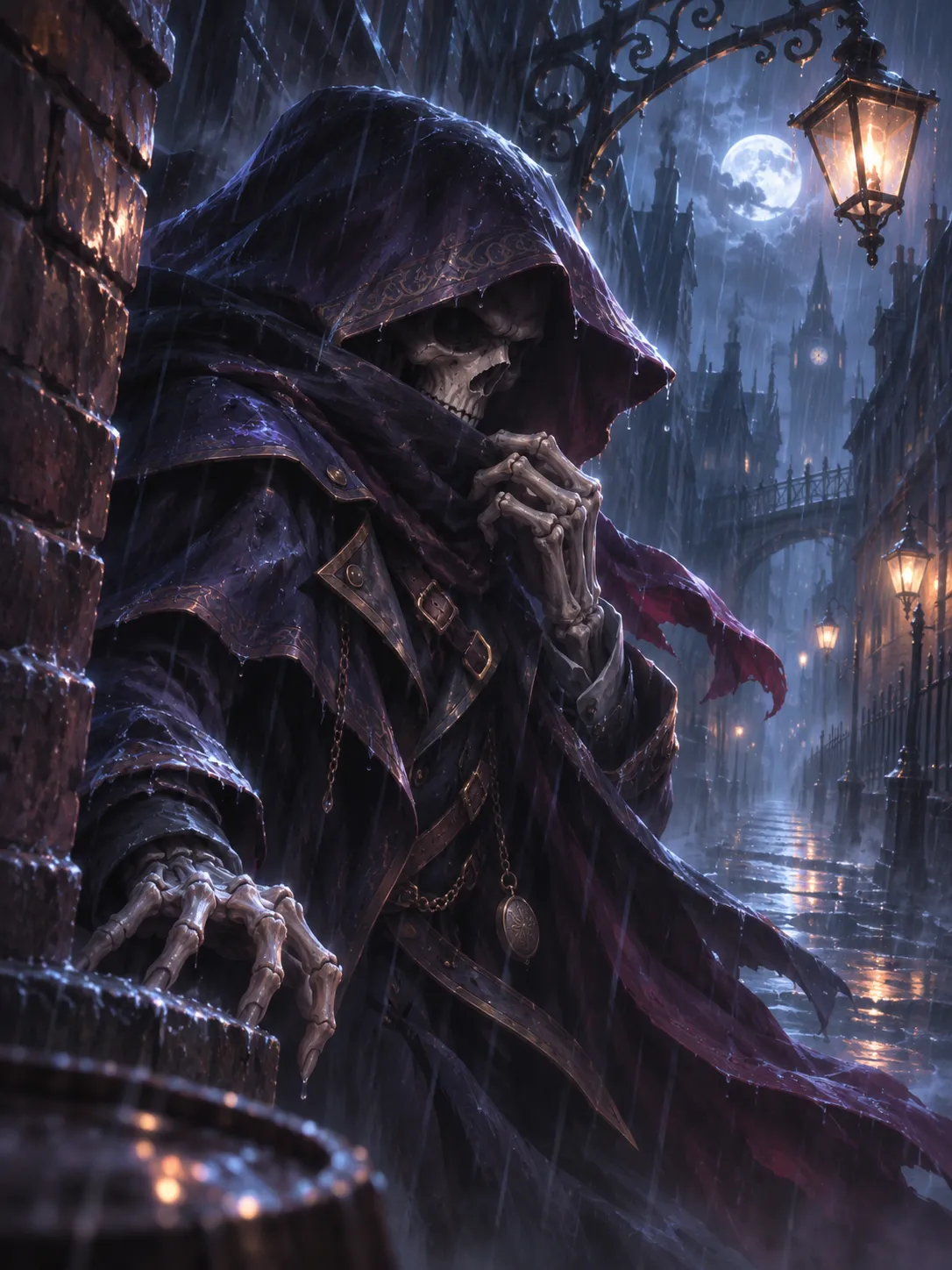
Before the First Radiance, the Galwarians woke their dead. Family and neighbours gathered around the body, and for a few minutes the ceremony gave the departed back their sight, their voice and their memory. The living told them whatever death had cut short: a debt forgiven, a quarrel laid to rest, the name chosen for a child they would never see born. The dead answered, sometimes with a single word, then their eyes closed, and this time death kept them.
Nobody feared those awakenings. Everyone knew that the dead who were called back soon slept again, after a calm and peaceful goodbye.
?
Heirs to the rite
The Galwarians’ powers did not survive the First Radiance. Their heirs (elves, drow and other peoples besides) kept the words of the rite and tried to carry it on with the magic of Élyséa, goddess of life. The goddess did not approve of her magic being used to call back the dead.
So the rite left the vigils where a whole village crowded in and moved behind closed shutters. Those who still knew the words came at night, sent for by a widow or by a son who had arrived too late for the last breath, and they left before dawn. The neighbours always found out. A house where the dead had been made to speak lost its friends first, then its customers, and in the end nobody would marry into it.
Little by little, what had been a farewell came to mean its opposite. The peoples of Eden filed the rite under occult and forbidden magic, and those who still remembered it stopped teaching it.
?
The Mad Roy’s archives
Between the two Radiances, the Undead left no real trace. The oldest contemporary account of them dates from shortly after the Second Radiance, once the humans had reached the land now called Victoria. It is found in the archives of Theodore, the Mad Roy, the first ruler of Victoria, who recorded his early research into occult magic there long before he condemned the whole region to the terrible darkness of the Void.
The Mad Roy was already dabbling in necromancy. Bruford was among his mightiest warriors, and when Colpe, the Devil of Extravagance, killed him, Theodore saw the perfect opportunity. He had the body carried to his workshops and locked himself in with it. He sawed Bruford apart, enchanted him and necrosed every inch of him, with no other aim than to make a monster that would carry out his lust for destruction. For nights on end his servants heard the saw through the walls, and when the workshop door finally opened, Bruford walked out Undead.
?
The myth of Bruford
The story escaped the archives and passed from mouth to mouth. Each teller gave the monster a more terrible shape than the last, and in every version his sawn flesh kept nothing of the warrior he had been. That myth shaped how the peoples of Eden see the Undead to this day: bloodthirsty abominations who will never know the peaceful bliss of the afterlife.
The old farewell, already forbidden, became unthinkable. Nobody dared call back a father any more, not even for a few minutes, for fear that something else would rise in his place.
?
Spies or accursed
The Undead return in many forms, and most civilisations reject many of them, if not all. They are taken for spies of dangers not of this world, sent back from the other side to look on someone else’s behalf. Worse still, some see them as people the gods have punished and cursed, condemned to wander the lands of Eden.
Either way, nobody wants one under their roof. You do not shelter a spy, and you do not break bread with the accursed, in case the curse settles on your house. When one of the dead comes home, the family wonders what wrong they did in life, and the neighbours wonder what the family did to deserve it. Often the road is all that is left, and their wandering is taken as proof of the curse.
In a woodcutters’ village, a month after burying her brother, a woman heard three small knocks at her door, the way the two of them had knocked as children. She did not open it. Through the window she handed him an old coat and every coin in the house, and begged him to go before the neighbours woke.
?
Among the living
At first glance few Undead look dead, Skeletons aside. Their bodies remain those of the Species they were: a dwarf comes back dwarf-high, an elf keeps her slender frame, and each still speaks the language of their childhood. Most give themselves away sooner or later, by smell or by look: a whiff of turned earth, a complexion the sun no longer warms, a hand too cool in yours. A keen eye spots it quickly. Everyone else notices at the end of a long evening, when the talk drags on and the face across the table never flushes.
To live in town, many learn to paint their faces and wear perfume before going out. One evening a pedlar caught in a downpour walked into an inn with colour streaming down his face, and the serving girl who handed him a cloth watched a skin appear beneath it that no blood coloured any more.
An Undead unmasked often loses everything in a single night. The innkeeper hands back the coins and shows them the door, the employer tears up the contract, and sometimes the watch is waiting at the edge of the village.
?
The refuges
Many end up joining others who have met the same fate, in hidden refuges: an abandoned hamlet deep in a valley, a mine gallery nobody works any more, the cellars of a burnt-out farm. The forms live side by side there without fear of one another. Revenants, Zombies and Ghouls share a roof, and a Skeleton hangs the skin it wears in town on a nail by the door.
Nobody finds a refuge alone. A newcomer usually arrives behind another Undead who recognised them on the road, by the smell or the too-cool hand, and decided they could be trusted with the way.
They still need clothes and oil, and paint for those who still go down to market. So they weave baskets and twist rope and mend tools, and sell it all through a few of the living who will take the bargain: a gravedigger who asks no questions, a carter who comes through the valley once a season.
?
The Liches’ guard
To this day the Undead remain a matter for the Weitzguard, which judges them by their deeds. It hunts the Liches and the soldiers they raise. Any other Undead it uncovers is questioned: where they come from, who raised them, whether they have shed blood. One who harms nobody is watched, or driven out of town, rather than destroyed, and a patrol that knows of a refuge is often content to note who comes and goes.
Nowhere does the Weitzguard have more to do than in Victoria. Liches roam the battlefields there, raising fallen soldiers into their own guard. One sergeant recognised a comrade in a Lich’s ranks, a man who had fallen beside him the season before, by the scar on his chin that the sergeant had stitched himself.